
Sliding Doors Advice
uPVC vs Aluminium Sliding Doors: Pros, Cons & Costs
Planning a new extension, renovation or just want to replace your outdated patio sliding doors with something new? uPVC and aluminium are two of the most popular choices to go for. uPVC is generally the more budget-friendly choice, while aluminium offers slimmer frames, greater strength and a more contemporary appearance.
This guide breaks down the pros and cons of each material and will help you make the decision about choosing aluminium or uPVC sliding doors for your home.
uPVC vs Aluminium Sliding Doors: At a Glance
| Factor | uPVC Sliding Doors | Aluminium Sliding Doors |
| Cost | Cheaper to manufacture resulting in a more budget-friendly option. | More expensive upfront, especially for more premium models. |
| Strength | Suitable for many standard residential installations. | Strong frames can support larger panes and openings. |
| Durability | Typical lifespan is around 20-30 years. | Typical lifespan is around 40 to 50 years. |
| Maintenance | Very low maintenance and easy to clean. | Low maintenance, easy to clean and resistant to corrosion. |
| Appearance | More bulky frames but available in several colours. | Slimmer frames and sightlines to maximise glazing on sliding doors. |
| Thermal Performance | Naturally insulating and provides strong energy efficiency. | Thermally broken profiles to reduce heat transfer and provide strong thermal performance. |
uPVC vs Aluminium Sliding Doors: What’s the Difference?
Cost
Let’s start with everyone’s first thought on a new home renovation, how much it will cost.
uPVC sliding doors are popular because they are generally the most affordable material option for homeowners. Each supplier and installer prices will be different, but generally costs will be based on the door dimensions, glazing and hardware options, finishes and whether you just get the door supplied or choose sliding door installation as well.
The cost of aluminium sliding doors will also be based on the size, glazing, hardware, finishes and supply and installation costs. But, aluminium sliding doors will have a higher upfront cost compared to uPVC because the raw material extraction and manufacturing requires far more electricity and specialised systems.
However, the high strength-to-weight ratio of aluminium doors means that the doors can have slim frames that hold larger glass panes without bending, which homeowners see as a good reason to make the bigger investment.
Appearance & Sightlines
Sightlines are basically how much of the frame you can see around the glass or panel. A door with slim sightlines has narrower frames, so you get a larger area of glass and a cleaner, more modern look.
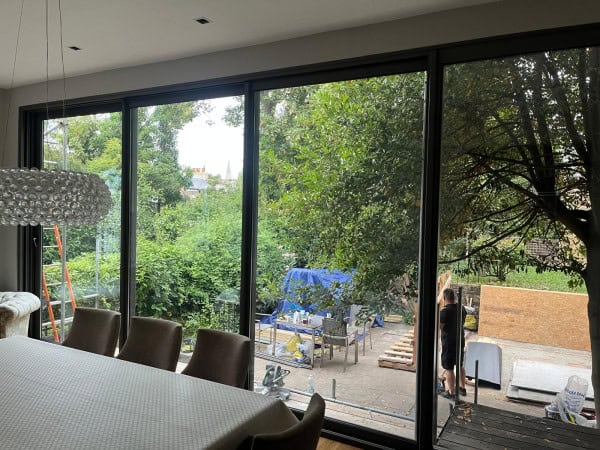
The high strength of aluminium means that homeowners can benefit from grander glass panels that flood the home with natural light. Modern aluminium sliding patio doors can have frames that measure as little as 45mm, with ultra-slim sliding doors achieving visible sightlines as narrow as 20mm, helping to create a more contemporary appearance. The aluminium frames can also be finished in all colours on the RAL spectrum, as well as various custom shades.
On the other hand, uPVC sliding doors have far thicker frames and sightlines, and while they suit modern properties, it doesn’t offer the same contemporary appeal as aluminium. Plus, the colour options for uPVC patio doors are limited, often with white being the standard option, but some manufacturers may offer colours like dark greys, black and wood-effect finishes.
Energy Efficiency
In terms of energy efficiency between uPVC vs aluminium sliding doors, the difference is relatively minimal. In terms of the frames, uPVC features a multi-chamber design that is naturally insulating and blocks heat transfer. Aluminum frames require thermal break technology, which is a low-conductive insulating barrier that stops heat transfer.
Beyond the frames, thermal performance also comes down to the type of glazing each sliding door has, the quality of the seals, the overall door condition and how well the door is fitted. Both uPVC and aluminium sliding doors can offer good U-values and help your home be energy efficient.
Strength, Durability & Maintenance
In this face-off category, aluminium wins in terms of strength. The metal is carefully formulated for high strength, allowing aluminium sliding doors to feature larger glass panels and suit larger openings in general. In terms of strength, uPVC is more than adequate for most properties in the UK, and provides more than enough strength to withstand forced entry, but is more suited to smaller patio areas.
How long do sliding doors last? Both uPVC and aluminium sliding doors can last for decades with proper maintenance, but aluminium is still the more durable material with typical lifespans exceeding 40 years compared to the 20 to 30 years of uPVC. This is because uPVC can yellow or discolour after prolonged UV exposure, and the doors can flex which may result in difficulty in use and affect other components.
This means there is an important difference to consider between aluminium vs uPVC sliding doors when it comes to maintenance. While both are very low maintenance materials, often only requiring a general clean every now and them, over time uPVC can flex under load, which may result in periodic alignment and cause extra strain and wear on rollers or tracks. Aluminium is extremely rigid and is not prone to warping, meaning tracks can stay straight and other hardware will last far longer.
Should I Choose uPVC or Aluminium Sliding Doors?
Neither uPVC nor aluminium is automatically the better choice. The right option depends on your budget, the look you prefer, the size of the opening and which features matter most to you.
Choose uPVC if:
- You want a more affordable option
- Energy efficiency is one of your main priorities
- You prefer a lower-maintenance material
- You are prelacing doors in a standard-sized opening
- You are happy with slightly wider frames and sightlines
Choose aluminium if:
- You prefer slimmer frames and larger area of glass
- You want a more modern, contemporary appearance
- You have a particularly wide or large opening
- Strength and durability are high priorities
- You are comfortable paying more for a premium finish
Both materials can provide good thermal performance when the complete sliding door system is properly specified, glazed, sealed and installed. Rather than choosing based on the frame material alone, compare the overall performance, appearance and cost of each system.
Can You Save Money by Buying Pre-Owned Sliding Doors?
The benefits of buying used doors mean that homeowners can purchase a more affordable alternative to brand-new, while also helping to reduce waste by keeping perfectly usable doors and materials in circulation for longer.
Before buying, check that the dimensions are suitable for your opening and inspect the glazing frames, locks, handles and other hardware for signs of damage or excessive wear. For sliding doors, it is also important to check the tracks and rollers and confirm which frames, fixings and other components are included, as missing or damaged parts could add to the overall cost.
Shop uPVC & Aluminium Sliding Doors at Green Doors
Whether you prefer the affordability and thermal performance of uPVC or the slim sightlines and modern finish of aluminium, the right patio sliding door depends on your space, budget and priorities.
At Green Doors, you can browse our current selection of pre-owned and new patio sliding doors and compare different sizes, materials and styles to find an option that suits your home.
Frequently Asked Questions
Are aluminium sliding doors more expensive than uPVC?
Aluminium sliding doors are generally more expensive upfront than uPVC options. However, the final price can vary depending on the dimensions, glazing, specification, hardware and installation requirements of the complete sliding door system.
Are aluminium sliding doors better than uPVC?
Neither material is universally better. Aluminum may suit homeowners looking for slim sightlines, strength, larger glazed areas and contemporary styling, while uPVC can be preferable if lower upfront costs, practical performance and low maintenance are higher priorities.
Are uPVC or aluminium sliding doors better for insulation?
The frame material alone does not determine a sliding door’s overall thermal performance. uPVC has naturally insulating characteristics, while modern aluminium systems can include thermal breaks to reduce heat transfer, so glazing, seals and the complete door specification should also be considered.
Which sliding doors have slimmer frames?
Aluminium sliding doors typically have slimmer frame profiles than uPVC alternatives. Aluminium’s strength allows manufacturers to use narrow sections while still supporting larger areas of glazing, helping to create slimmer sightlines and a more minimal appearance.
Can you buy second-hand uPVC and aluminium sliding doors?
Yes. Green Doors offers pre-owned sliding doors in different materials, including uPVC and aluminium options where available. Before buying, check the dimensions, glazing, frame, hardware and included components to make sure the door is suitable for your opening. We also always recommend seeking professional installation on your purchase. For any help on your order, don’t hesitate to get in touch.