
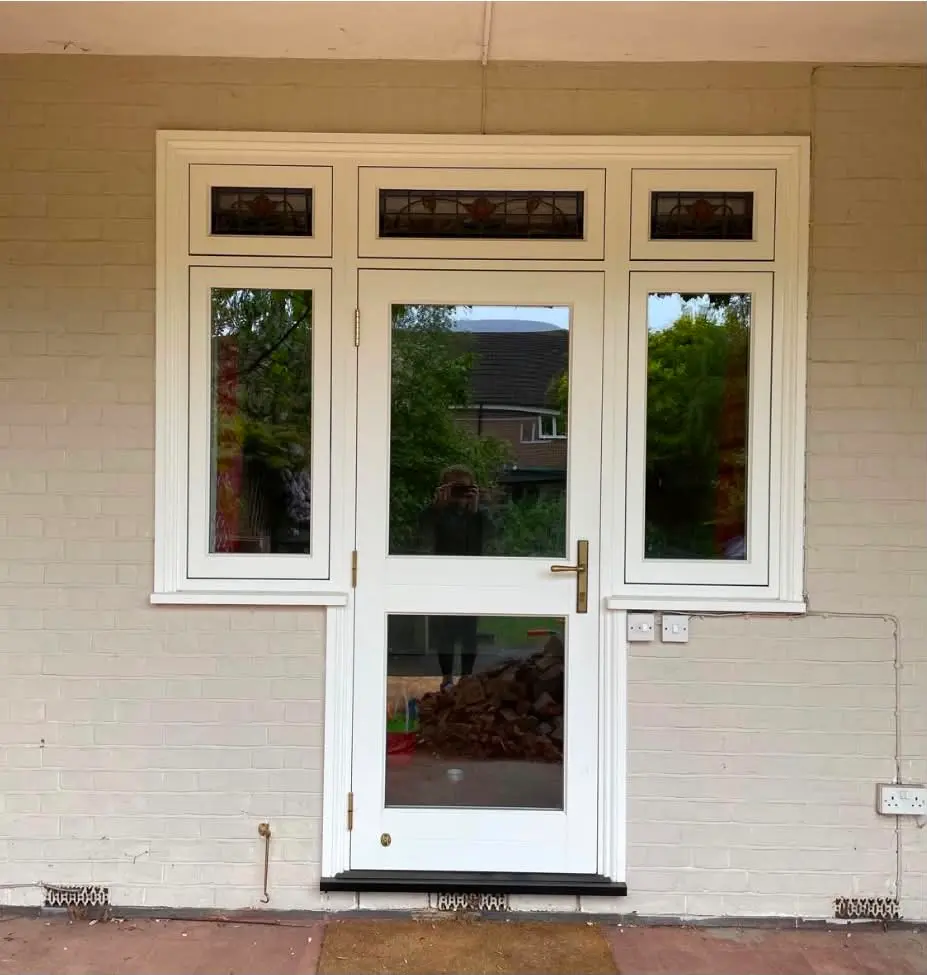
Back Doors Advice
Energy-Efficient Back Doors Explained
Conscious of your home’s energy efficiency? Choosing an energy-efficient back door is one way to limit heat loss and draughts in your home. But it takes the complete door set, including the frame, door panel, glazing, seals and fit, to deliver the results you’re looking for.
If your home’s current back door isn’t performing as they should, that doesn’t necessarily mean you have to buy new. A suitable pre-owned back door can also improve your home’s energy efficiency at a lower purchase cost.
This blog explores what makes back doors energy efficient, including the material options available, helping you make the right decision for your lifestyle and home.
What Makes a Back Door Energy Efficient?
Energy efficiency depends on more than the material alone, with the performance of the complete door system also playing an important role. When choosing an energy-efficient door, consider these key parts of the system:
- Door leaf – the main door panel.
- Door core – particularly important in composite, steel and aluminium doors.
- Door frame – frames with good insulating properties help limit heat loss around the perimeter of the door.
- Thermal breaks – these separate conductive sections of the frame or door leaf to reduce thermal bridging.
- Glazing – where the door includes glass, double or triple glazing can improve overall thermal efficiency.
Other hardware and components can also influence a back door’s overall energy performance. Things like keyholes and letterplates often have minimal effect on energy efficiency, but installation quality, while not technically a component, is crucial for enhanced energy efficiency. Even a highly insulated door can perform poorly if gaps, misalignment or poorly sealed junctions are left during installation.
You can often spot when a back door is no longer performing efficiently. Persistent draughts around the edges can point to worn or degraded perimeter seals, while cold spots around single glazing may indicate that the glass is allowing more heat to escape. It is also worth checking whether the door sits evenly within the frame, as misalignment can create small gaps that let cold air in.
Depending on the cause, replacing damaged seals, adjusting the door or frame, upgrading the glazing or replacing an older door can all help improve its thermal performance.
Which Back Door Materials Are Energy Efficient?
While the material of your back door isn’t the only contributor to good thermal performance, it is still a core feature that needs to be considered. Plus, the material choice not only influences energy efficiency, but the visual element as well.
uPVC Back Doors
Typical Energy Rating – A to A+
Typical U-value (W/m²K) – 1.2 – 1.8
Unplasticised polyvinyl chloride (uPVC) is a very popular material choice for back doors because it’s one of the most affordable options while still being very energy efficient. This is because uPVC back doors feature multi-chambered frames, which create insulating air spaces within the profile, reducing heat transfer, all while adding greater durability and weather resistance.
If the uPVC back door features glazing, it’s best to choose double-glazed panels at a minimum, and always ensure the seals are checked often and replaced when needed.
Composite Back Doors
Typical Energy Rating – A to A++
Typical U-value (W/m²K) – 0.8 – 1.4
Composite back doors are made using a combination of materials, which are designed to provide strength, security and good thermal performance. Most feature an insulating core surrounded by other materials, such as timber, uPVC or glass-reinforced plastic (GRP), helping to reduce the amount of heat that passes through the door.
The exact energy efficiency will depend on the construction of the complete doorset, including the thickness and type of core, glazing, frame and seals. Choosing suitable double or triple glazing and keeping the perimeter seals in good condition can help maintain its thermal performance over time.
Timber and Other Back Doors
Typical Energy Rating – Varies by door material
Typical U-value (W/m²K) – Varies by material and specification
Timber back doors can also provide very good energy efficiency when they are correctly designed, fitted and maintained. Timber is naturally less conductive than materials such as aluminium, while modern timber doors can also include insulated cores, effective weather seals and double or triple glazing to further reduce heat loss.
Other materials, including aluminium and steel, can also achieve good thermal performance when the complete door is appropriately specified. Features such as insulated cores and thermal breaks are particularly important for metal doors, while effective seals, suitable glazing and professional installation can make a significant difference regardless of the material you choose.
Can a Pre-Owned Back Door Still Be Energy Efficient?
Choosing an energy-efficient back door does not necessarily mean buying brand new. Where the individual door’s specification, condition, measurements and installation are suitable, a pre-owned back door can perform just as well as a bespoke new system.
Pre-owned high-spec doors, whether uPVC, composite, timber, aluminium or steel, retain their thermal properties while significantly reducing carbon footprint compared to newly manufactured units.
This is why we have a great range of high-spec, pre-loved back doors as part of our stock at Green Doors. We rescue and refurbish usable doors that may otherwise go to landfill. This means you can pay for an energy-efficient back door without paying the price of an equivalent brand new system.
Find Back Doors at Green Doors
There is no one feature or material that means one type of back door is more energy efficient than another. Composite materials, uPVC, aluminium, steel and timber each have their own advantages, but each can offer superb thermal performance, helping to provide more stable temperatures and reduce your heating costs.
Green Doors sells a wide range of new and pre-owned back doors to choose from. Give a door that might otherwise go to waste another chance at life and get it professionally installed to ensure it meets your energy efficiency requirements. For any help on your order, get in touch with our team and we’ll be happy to assist or answer any questions.
Frequently Asked Questions
What is the most energy-efficient type of back door?
Composite and modern uPVC back doors can both provide strong thermal performance. Rather than choosing by material alone, compare the complete doorset, including its construction, glazing, seals, U-value and how well it has been fitted.
What U-value should an energy-efficient back door have?
A U-value measures how much heat passes through a door, so a lower U-value indicates less heat transfer and better thermal performance. When comparing back doors, check the U-value of the complete doorset rather than judging efficiency by the frame material alone.
Are glazed back doors energy efficient?
Yes, glazed back doors can be energy efficient when they are appropriately specified. Their overall performance depends on factors such as the type of glazing used, the quality of the seals and frame, and the construction of the complete door. Double or triple glazing incorporating low-emissivity glass is often the best choice to reflect heat back into the home during colder months.
How do I know if my back door needs replacing?
Persistent draughts, damaged or deteriorated seals, glazing or frames, and a door that no longer fits or closes correctly can all indicate reduced performance. Depending on the condition, adjustment or repair may help, while more extensive deterioration could make replacement worth considering.
Can second-hand back doors be energy efficient?
Yes, second-hand back doors can still provide good thermal performance when they are in suitable condition. Check the dimensions, frame, glazing, locks, hardware and included components before buying. Our reuse model at Green Doors makes pre-owned back doors available for reuse rather than treating new as the only option.